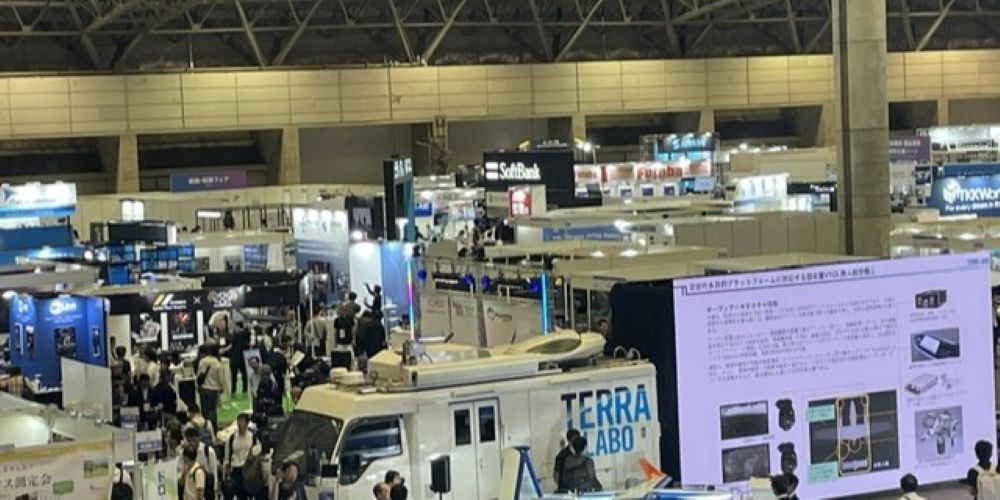

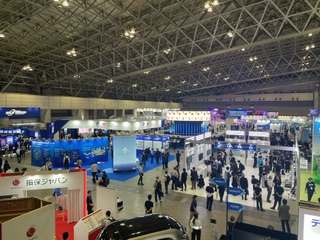
CEATEC 2026, the largest digital innovation exhibition in Japan, was held from October 13 to 16 at Makuhari Messe in Chiba Prefecture. Marking its 27th edition, this year's theme was "Transformation: Toward a Change in Enterprise, Industry, and Society."
The event featured 821 companies and organizations—including 338 first-time exhibitors—along with 194 entities from 31 countries and regions overseas with over 100,000 visitors.
A Surge in New Exhibitors and Greater Diversity
A key highlight of CEATEC 2026 was the record-high presence of startups, universities, and research institutions, totaling 246 exhibitors. Furthermore, first-time participants accounted for a record 41% of the total. Walking through the venue, there were so many booths hosted by public institutions, universities, startups, and international joint pavilions (such as the EU and UAE) , giving a clear impression of increased diversity among exhibitors. Additionally, this year’s event was held concurrently with the automotive exhibition "Japan Mobility Show Bizweek 2026," allowing visitors to move freely between both venues.
Here are a few standout exhibits from the show floor!
From Thinking AI to Moving AI
The overarching impression from exploring the venue was that the practical implementation of AI into society is accelerating. "Physical AI" has recently been making headlines. While traditional AI supports human decision-making, Physical AI takes those decisions and executes them through real-world motion. The development of AI-driven robots is expected to play a crucial role in automating and unmanning tasks across industries such as manufacturing, construction, and healthcare.
Demonstrations at CEATEC 2026 included humanoid robots placing parts of various shapes and sizes onto shelves, as well as a live demonstration of remote-controlled screw tightening on engine cases.
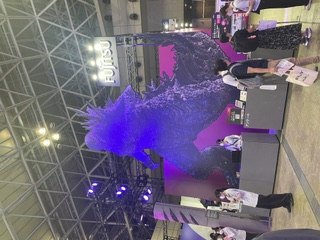
Simulating a Godzilla Attack in the Digital Realm
At Fujitsu's booth, visitors were greeted by an imposing, massive Godzilla panel at the entrance. The exhibit offered a digital simulation of how people should evacuate if Godzilla were to invade downtown Tokyo. Utilizing "Social Digital Twin" technology—which reproduces the movement of cities and people in digital space—visitors could experience a "digital rehearsal" designed to help test and refine disaster response strategies.
Exploring the Olfactory Dimension: "Scent-Based" Technologies
The National Institute of Advanced Industrial Science and Technology (AIST) showcased a "Compact Wearable Olfactory Display."
While current Virtual Reality (VR) relies primarily on visuals and sound, this research enhances immersion by releasing precise micro-doses of ambient scents. The booth featured a VR headset equipped with scent-dispensing capabilities; shortly after putting it on, a pleasant, perfume-like aroma filled the air. By synchronizing scent with VR scenes, this technology aims to improve learning outcomes and serve as an educational tool for vocational training.
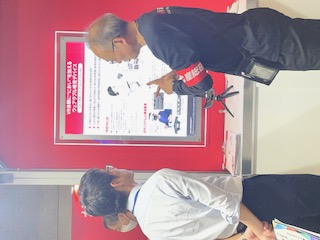
Taiyo Yuden Co., Ltd. presented a cancer screening technology combining odor sensors with AI analysis. By capturing biological changes through urinary components, this system aims to assist in early cancer detection.
With so many intriguing exhibits, spending a single day at the venue simply wasn't enough.
It was an inspiring exhibition that truly embodied this year's theme: "Transformation."
💡Maximize Your Trade Show ROI with Our Expert Support
J-Tradeshow Connect’s Trade Show Support Services provide end-to-end solutions to drive your business growth in Japan—from pre-event strategy and on-site bilingual operations to lead generation and meeting acquisition. Feel free to contact us via our inquiry form to learn more!
(J-Tradeshow Connect Editorial Team)